Karkade: the ruby-red welcome of Aswan
In the far south of Egypt, hibiscus is more than a drink. It is how guests are welcomed and celebrations are toasted.
Arrive at a home in Aswan and before long a glass of deep red karkade will be placed in your hand — iced in summer, steaming in winter. Hibiscus is the taste of southern hospitality.
A late-autumn harvest
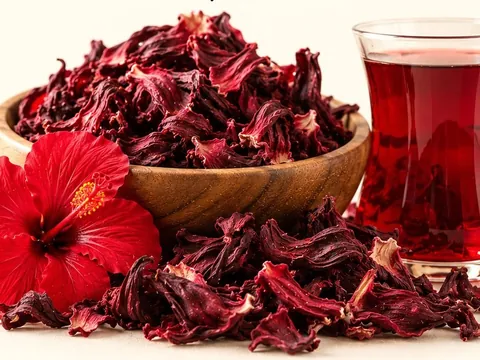
The hibiscus grown here is Hibiscus sabdariffa. After the plant flowers, the fleshy red calyx swells around the seed pod. In late autumn, families pick the calyces by hand and spread them on rooftops and mats to dry in the strong southern sun, turning them deep crimson and crisp.
How Egypt drinks it
Cold karkade is steeped overnight and sweetened, then served chilled — the drink of weddings and Ramadan evenings. Hot karkade is brewed like tea. Either way, the flavour is bright and tart, close to cranberry, with a colour that seems to glow.
From rooftop to pouch
We source whole calyces, not broken pieces, because whole flowers keep their colour and aroma longer. They are cleaned, sorted and packed in resealable pouches, ready for your kitchen or café.
Try it simply: two tablespoons in half a litre of water, steeped for ten minutes hot or overnight cold.